
Hydrogen hubs: A few things to consider.
The Biden Administration's $7 billion investment in decarbonizing the country is gaining traction due to a $925 million effort to build a hydrogen hub in West Virginia, which will span parts of western Pennsylvania.
Some in the region consider this investment from President Biden as a win for energy independence and assistance in limiting emissions for heavy polluting industries, like steel. While others view this endeavor as an out-of-touch move by the federal government to subsidize corporate polluters to continue emitting greenhouse gases.
Here are a few things to consider:
Hydrogen is the most abundant element in the world and in its purest form, its only byproduct is water.
But hydrogen is considered a "sticky" molecule and is often attached to other molecules, like oxygen (to create water, or H2O). To use hydrogen, it needs to be separated from other molecules. However, that process requires energy — usually fossil fuels. Using natural gas and other fossil fuels to produce hydrogen accounts for roughly 96% of current production, and is known as "gray hydrogen."
Again, by itself, hydrogen is clean, which is why many tout it as being a clean alternative to fossil fuels. But, as mentioned above, it takes lots of energy to get hydrogen to that pure form, which makes it problematic for limiting emissions and ending climate change.
There are a variety of ways to produce hydrogen, and some are "cleaner" than others. Those in the energy industry use color-coded names to define how "clean" production is.
"Gray hydrogen" uses natural gas. “Blue hydrogen” is also produced with natural gas but uses carbon capture to attempt to limit emissions. “Pink hydrogen” uses nuclear energy. Wind and solar produce “green hydrogen.”
Marion Gee, co-executive director at the Climate Justice Alliance, a national coalition representing 89 rural and urban community-based environmental justice organizations, calls hydrogen hubs a "scam."
“At face value — and according to the Biden playbook — the hydrogen hub grants aim to help transition the United States to clean energy," Gee said. "In reality, they amount to another corporate scam, one that preserves and extends the life of the extractive economy and prevents the frontline communities most impacted by climate disaster from having input."
Others consider hydrogen hubs valuable in slowly cutting emissions from necessary industries that are major emitters of pollution, like steelmaking and cement manufacturing.
“These are industries that are otherwise very difficult, if not impossible to abate. So these industries are going to disappear if we do not have this pathway available,” Andrew Place, state energy and climate policy director at the Clean Air Task Force and a former commissioner of the Pennsylvania Public Utility Commission, said.
Locally, Shell recently withdrew from an effort made by the Decarbonization Network of Appalachia (DNA) to create a hydrogen hub in western Pennsylvania.
According to reports, Shell withdrew to "reduce overall costs and improve the viability of DNA."
There is much more to consider when examining what a hydrogen hub could mean for our region. The links at the top of this article provide more resources to explore. Additional resources are also below, including a recent post from FracTracker, a video from Planet A and several thoughts from the Environmental Defense Fund regarding hydrogen hubs and climate change.
FracTracker provides meaningful info about the connection between hydrogen hubs and fracking.
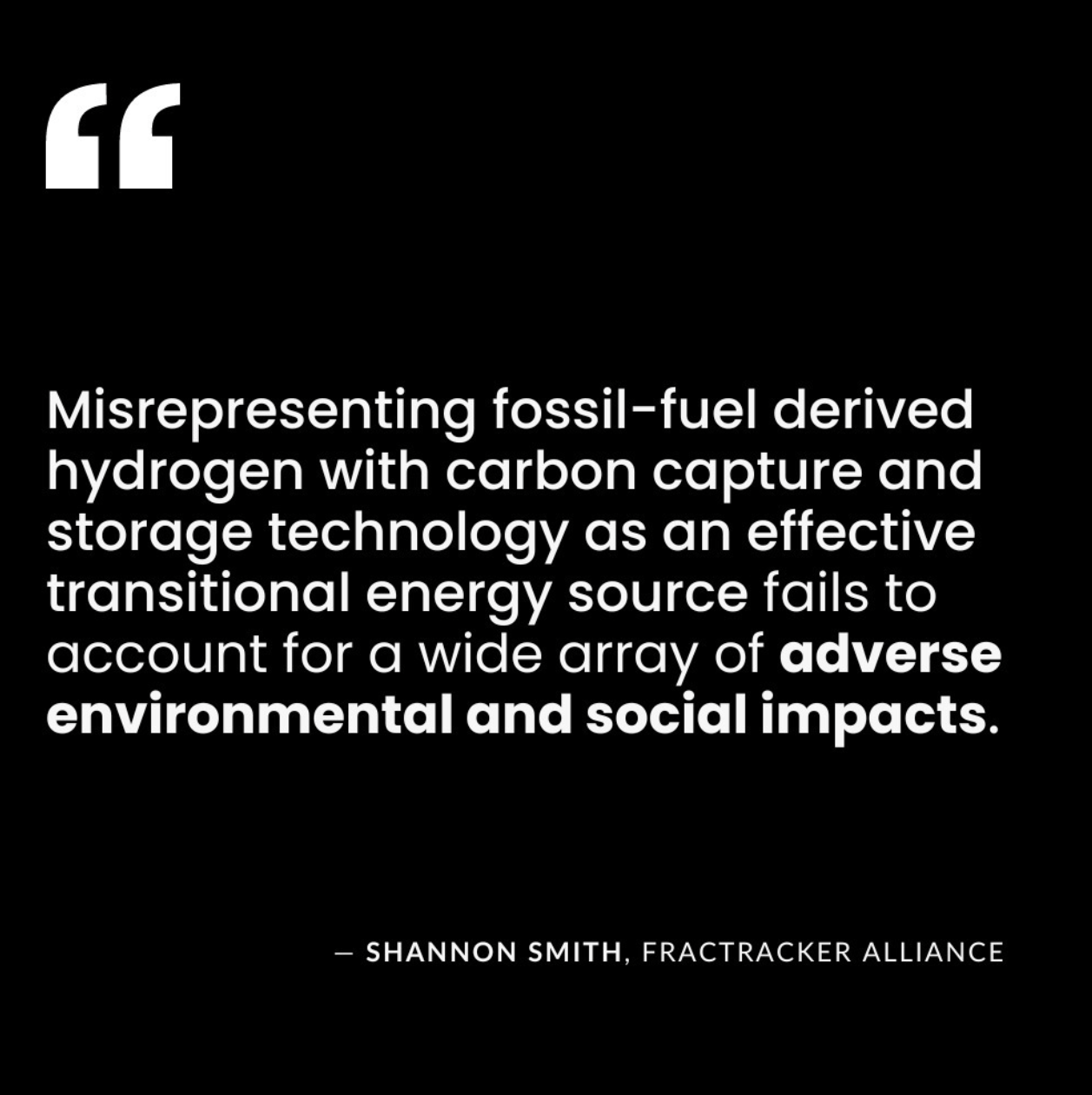
Check out FracTracker's social media page here. Website link here.
This video offers more info about hydrogen hubs:
Five things to help ensure a positive climate outcome, according to EDF.
According to the Environmental Defense Fund
Conduct more research on hydrogen’s warming effects relative to other greenhouse gases and develop models that can increase confidence in the impacts hydrogen deployment would have on global temperatures at varying leakage rates.
Accurately measure leakage, which will require equipment capable of measuring hydrogen concentrations at the parts-per-billion level, so we can systematically quantify leakage rates.
Use climate metrics that reflect the role that hydrogen leakage could play over the policy-relevant near-term, instead of relying exclusively on 100-year accounting.
Include the likelihood of hydrogen leakage and its impacts in decisions about where and how to deploy hydrogen. Use should be concentrated where it is produced and used in close proximity, with limited need to transport it.
Identify leakage mitigation measures and best practices. Lessons learned over the past decade about minimizing natural gas leakage can help, despite the differences in the properties of these two gases.

Owen Rossi-Keen
Owen Rossi-Keen is the Founder and Principal Software Engineer at Iliad.dev, LLC, a web development agency focused on delivering enterprise-grade customization without the enterprise price-tag.
Pittsburgh, Pennsylvania