
Prioritizing mental health can feel like a luxury.
Between high costs of living, a volatile political climate, and uncertainties around job security, getting mental health treatment isn’t always affordable.
Nearly 600,000 adults in Pennsylvania did not receive needed mental health care in 2025, and more than 32% say it was because of cost, according to recent data collected by the National Alliance on Mental Illness (NAMI).
In 2023, 57% of 12- to 17-year-olds with depression did not receive any care, NAMI found.
The primary reason? Cost.
In fact, people who live in Pennsylvania are five times more likely to be forced out-of-network for mental health care than for primary care. And local therapists are feeling the weight of those accessibility issues.
“If I could fix one thing about the mental health system, it would be accessibility,” said Maggie Caesar, chief program officer at Glade Run. “Getting help is just too difficult right now. People shouldn’t have to sit on waitlists for months, fight through insurance barriers, or drive long distances just to see a therapist. Mental health services need to be affordable, easy to access, and available before a person’s struggles turn into a crisis.”
Therapists say the cost is indicative of a deeper, more systemic problem within the mental health field.
“The cost of running a quality mental health program includes much more than the hour a therapist spends with a client,” Caesar said. “It includes supervision, training, licensing requirements, documentation, technology, compliance, facilities, benefits, and all the infrastructure required to provide safe and effective care. If reimbursement rates do not keep pace with those costs, providers struggle to hire and retain staff, programs close, and access gets even worse.”
True equity, Caesar says, “means not only covering mental health services, but paying rates that allow providers to sustainably deliver those services.”
To accomplish this, Alyssa Roig, a local therapist, thinks two things need to happen: first, we need more integrative and inclusive care, especially when it comes to youth mental health.
“Everything is so disjointed,” Roig said. “Schools are treating kids in one way and not receiving support in the outside community. Doctors are treating the physical but not the mental health, and they don’t know how to give support to mental health. We need to find ways to integrate health systems.”
While many schools partner with nonprofits who provide mental health services to students, Roig suggested that schools should be required by the state to hire therapists.
“That way, therapists would have the opportunity to receive the same benefits as other school professionals, such as pensions, unions, wage increase ladder scales, etc.,” Roig said.
Additionally, more inclusive care includes early interventions so that at a young age students are being seen by people who look like them.
“There are a lot of white women in the mental health field and a lot of white people in the physical health field. I’m not saying people that don’t look like you can’t help you. But it helps to not have to explain what it’s like to be trans or Black or Latin,” Roig said. “I would love to see Beaver County have its officials and representatives make a bigger push to have mental health represent its community.”
Second, Roig said people need to make enough money to live. That includes the everyday person as well as educators and therapists.
“Sometimes it costs somebody their entire paycheck to get to a doctor, and it shouldn’t be that way,” they said. “If people have access to affordable housing and food and clothing — what you need to be a human in society — we are going to see crime rates go down. If we’re not changing systems, people can’t really change. In therapy, if people are understanding their patterns and understanding their outbursts, but then are going home to unstable housing or lack of resources, how can they change?”
Caesar agrees. Mental health doesn’t exist in a vacuum, she said. Oftentimes, depression and anxiety are one piece of a much bigger problem.
“I worry about the impact of funding cuts to programs that support basic needs,” Caesar said. “Many of the children and families I work with rely on programs like WIC and SNAP. When families are struggling to afford food, housing, transportation, or other necessities, mental health often becomes just one of many challenges they are trying to manage.”
Therapists need support, too.
“I was a young, queer kid who grew up in Beaver County,” Roig said. “I was alone and isolated and a lot of trauma came out of that. I ended up kind of getting pushed into therapy not by my will, and thankfully the therapist that landed with me was phenomenal and changed my view of myself and helped me heal.”
“And that made me want to do the same thing for others,” they added.
Roig is an art therapist and has 20 people on their waitlist. Approximately 90% of their caseload is LGBTQ+.
“I get four requests a week for people who are struggling with their gender identity. And then I have to turn away and refer people to other trans therapists, but they have waitlists, too,” Roig said. “We don’t have enough mental health therapists, but it’s expensive to go to school. It’s a privilege to go to school and less and less people are doing it.”
Caesar said most people don’t realize what it takes to enter one of the “helping” professions.
“To become a therapist, you typically need a bachelor’s degree, a master’s degree, thousands of hours of supervised experience, licensing exams, continuing education, and ongoing professional training,” she said. “By the time many clinicians enter the workforce, they have invested six or more years in education and are carrying anywhere from $60,000 to $100,000 in student loan debt.”
And the financial return often doesn’t match the investment, she said.
“A typical licensed masters’-level therapist in Western Pennsylvania may start out making somewhere between $50,000 to $60,000 per year while also trying to pay back hundreds of dollars a month in student loans,” Caesar said. “When you compare that to other professions requiring similar education and training, it becomes easier to understand why recruitment and retention continue to be such a challenge.”
The double-edged sword of mental health “influencers.”
The stigma in mental health has dramatically reduced over the past decade or so. In fact, Caesar credits shows like American Idol for some of that.
“When American Idol first hit the air, a couple seasons in they would show a vignette of performers. We would see people with Autism Spectrum Disorder, some people would say, ‘I have Tourette’s, I have OCD.’ And these people were also talented,” she said. “Kids started to resonate with that right away.”
Caesar said her young clients would come into therapy and immediately start talking about performers on American Idol.
“‘Did you see so and so — they have a disability,’” Caesar said, explaining how her clients would start their sessions.
While many students felt seen and inspired to talk more about their mental health, Caesar also said, “the downside was we saw people over-identifying with mental health symptoms.”
Social media has amplified that concern.
More than half of the top 100 mental health TikToks in 2025 contained misinformation, a study by The Guardian found.
In their 2025 study, The Guardian took the top 100 videos posted under #mentalhealthtips on TikTok and had psychologists, psychiatrists and academic experts view them to expose misinformation. During their analysis, experts found that 52 videos contained misinformation and much of the content misused therapeutic language.
That’s something Dr. Kenya Johns, the mayor of Beaver Falls and a local therapist, said she’s noticed, too.
“Social media has created a distorted reality of what counseling is and has begun to pathologize sheer human existence,” Johns said.
That’s why therapists say authentic and caring relationships matter and it’s important to get connected with reliable resources from places like the Beaver County System of Care, which provides a comprehensive list of resources in the county.
Misconceptions about therapy.
For many years therapy was seen as punitive. It was almost a punishment for those with certain mental illnesses, Roig said.
“And many people still view it as punitive,” they said. “I wish people would see it as a place where you can learn about yourself and how things in your childhood or your past made you think the way you think.”
Therapy is there to serve clients, but Roig said its purpose isn’t necessarily to provide advice.
“That is not the reality of the job,” they continued. “The reality of the job is to be a space for people to sit in and to be a vessel for people to hold their pain and trauma.”
Johns said she commends parents who advocate for their children to get support in counseling.
“I wish more parents understood that the most successful outcomes for young people are when their parents are also in counseling and willing to do the work and change. Systems oftentimes have to change to best support young people,” she said.
Sometimes people simply need someone objective to talk to, Caesar said, “someone who can help them sort through challenges and see things from a different perspective. We want Beaver County families to know that they are more than any diagnosis, that treatment is not one-size-fits-all, and that healing looks different for everyone. Progress is rarely a straight line, but with the right support, people can continue moving forward.”
Johns is hopeful that soon mental health will be as prioritized as physical health.
“Imagine if you walked around with a visually broken limb, people would go out of their way to make sure to tell you to go to the doctors or hospital or anywhere to get help. Mental health should be no different,” Johns said. “The challenge is we can't always see the broken limbs on the outside so it's harder for us to push those to get the help and support that they deserve. I wish people understood that you don’t have to wait until something is wrong to talk to someone.”
Roig believes that systemic change is possible in the mental health field.
“I have hope and belief that we as a society can make changes,” Roig said. “If we all just stop fighting for changes, there is no hope.”
At the end of the day, Caesar said, “if we want to improve mental health outcomes, we also need to support the programs that help people meet those basic needs, including WIC, SNAP, housing supports, and other community resources. Fixing mental health means investing in both the people who need services and the people providing them.”
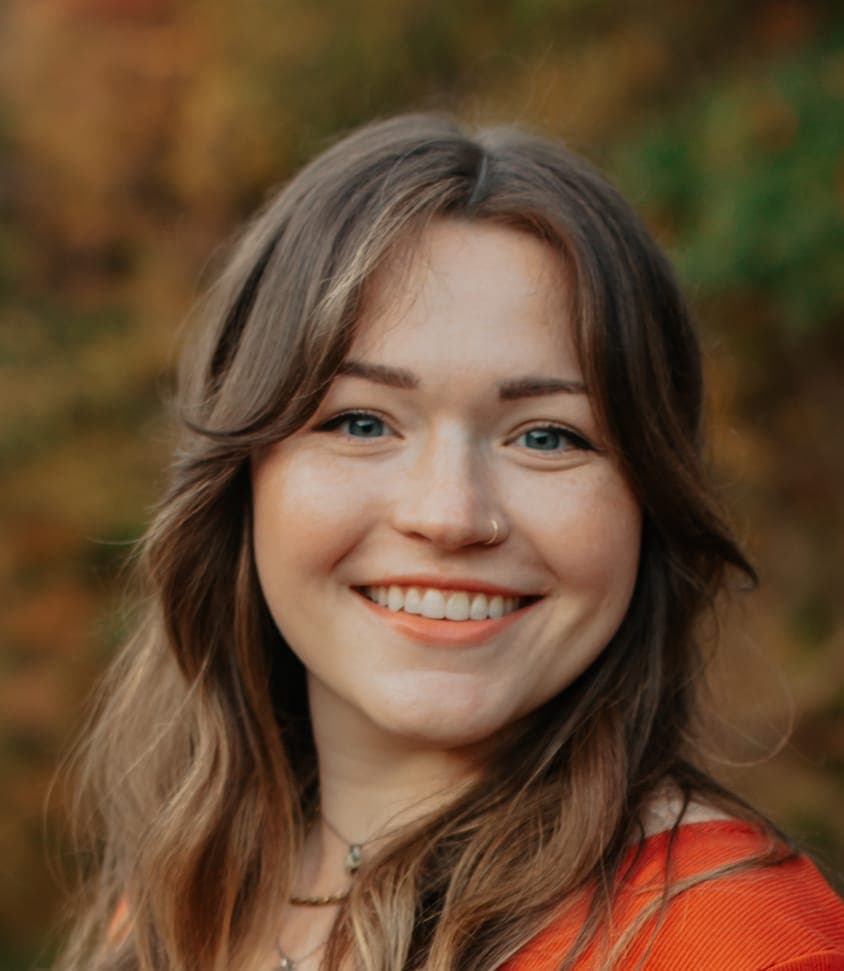
Dani Brown
Dani Brown is the editor-in-chief of The Bridge and also works as RiverWise's Director of Strategic Communication. She's an award-winning journalist and former reporter for the Beaver County Times and USA Today Network.
Beaver Falls, Pa